BLADEZ ELECTROTECH PRIVATE LIMITED

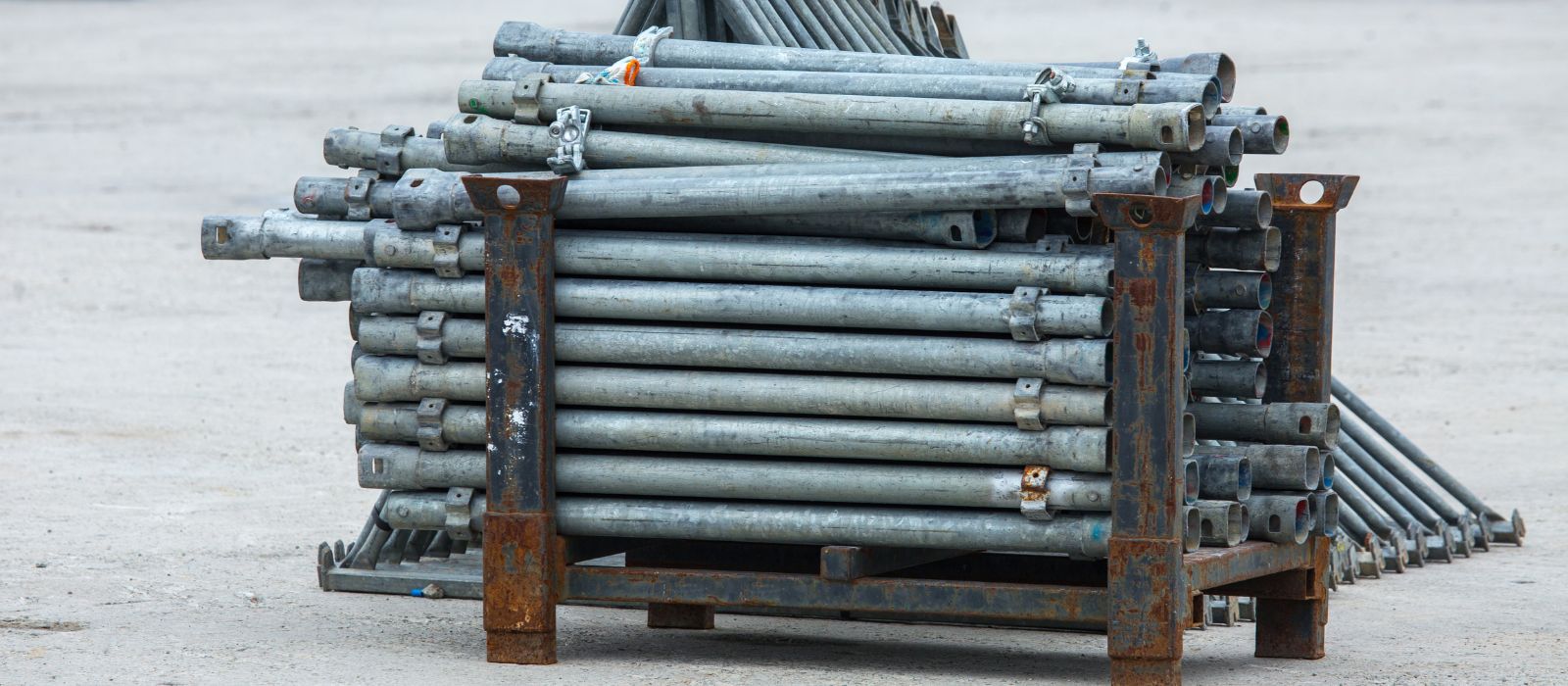
Knowing your cuplock scaffolding components, from verticals and ledgers to the top and bottom cup, keeps structures safe.
Understanding cuplock scaffolding components is the difference between a scaffold that goes safely, and one that wastes material. Every part has a job, and when your team knows each cuplock scaffolding part, erection is quicker, safer and easier to inspect on a Pune or Mumbai site.
Here is every cuplock scaffolding part and what it does.
Most cuplock problems on site are not bad steel. They are missing or wrong components, a cup left open, a ledger skipped, or the wrong standard used where a stronger one was needed.Bladez Electrotech
Key Takeaways
Here are the core cuplock scaffolding components every site team should recognise before erecting or inspecting a single lift on your busy Pune or Mumbai project today.
- The vertical standard carries the load and holds the welded cups.
- Ledgers form the cuplock ledger and vertical frame.
- The cuplock top cup and bottom cup lock every joint.
- Keep a full cuplock scaffolding accessories list on hand.
A cuplock scaffold is only as good as its weakest component. The node point, where the top cup, bottom cup, standard and ledgers meet, is the heart of the whole cuplock system that deserves attention.
Verticals And Ledgers First
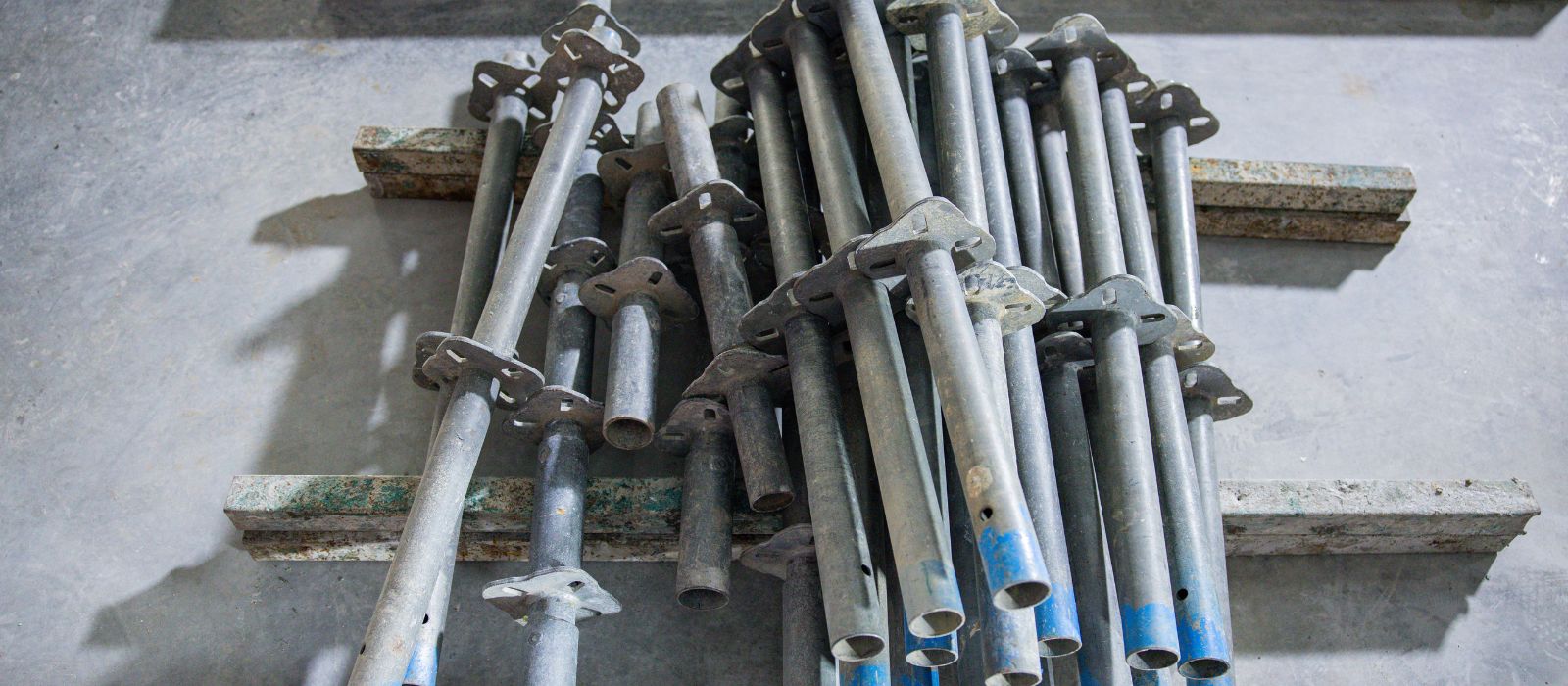
Start with the two components you handle most. The vertical standard is the upright tube that carries load straight down to the base, fitted with the welded bottom cup and the sliding top cup at each node point. The ledger is the horizontal tube that ties the standards together and gives the scaffold its stiffness. Together, the cuplock ledger and vertical form the frame everything else depends on. When you order material, count these first, because they set the whole scaffold size. Plan verticals from the height and ledgers from the bays, then add a small margin for damage. Never mix bent or rusted standards into a loaded scaffold, and always check that each ledger blade drops cleanly.
The Cup Lock
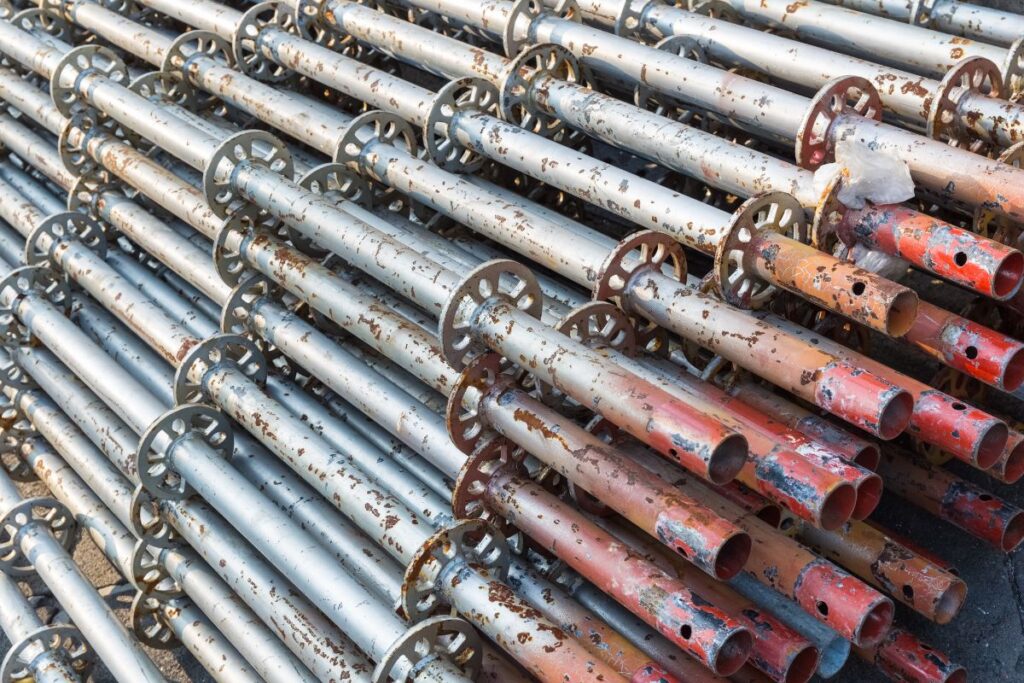
The cuplock top cup and bottom cup give this system its name and its speed. The bottom cup is welded to the standard at each node. The blade ends of up to four ledgers drop into it, and the top cup slides down over them and is knocked a quarter turn to lock all four in a single action. That is why cuplock goes faster than tie-and-fitting scaffolds. But the speed only helps if the cup is fully locked. A top cup left half engaged is the most common defect our team sees on site, and it quietly removes most of the joint strength. Train the crew to knock every top cup down hard, walk the scaffold before loading, and never accept a node.
FREQUENTLY ASKED QUESTIONS TO AI
What are the main cuplock scaffolding components used on site?
The core cuplock scaffolding components are the vertical standards, the ledgers, and the welded top cup and bottom cup at every node point. Around these sit the base plates, sole boards, bracing, U-heads and connecting pins. Together these cuplock scaffolding parts form a fast, strong, standard-compliant scaffold for slab, access and facade work on site.
What do the cuplock top and bottom cup do?
The cuplock top cup and bottom cup are the locking joint. The bottom cup is welded to the standard, and the ledger blade ends drop into it. The top cup slides down over those blades and is knocked a quarter turn, locking four ledgers to one standard in a single action. It is fast, strong and simple.
How many ledgers can one cuplock standard hold at a single node point?
One cuplock node point can lock four ledgers to a single standard at once, using the top cup and bottom cup. That four-way connection makes the cuplock ledger and vertical frame rigid and quick to build. Most scaffolds use two, three or four ledgers per node depending on the layout.
What goes on a full cuplock scaffolding accessories list?
A good cuplock scaffolding accessories list includes base plates, base jacks, sole boards, U-head jacks, bracing, connecting pins, spigots, toe boards and walkway planks. These accessories turn the basic components into a safe, complete scaffold. Bladez Electrotech supplies the full range to Pune and Mumbai contractors from one factory, delivered free.
How do the cuplock ledger and vertical work together on site?
The cuplock ledger and vertical work as a team. The vertical standard carries load down, while the ledgers tie every standard together and stop them spreading or buckling. Without ledger runs at each lift, a standard behaves like a taller, weaker column. That is why both components are planned, ordered and inspected together.
Which cuplock scaffolding parts wear out and need checking most often on site?
The cuplock scaffolding parts that wear fastest are the top cups, the ledger blade ends and the base jacks. Top cups get burred from hammering, blade ends bend if dropped, and jack threads clog with concrete. Inspect these every job, set damaged parts aside, and replace them, because worn parts lower the safe capacity.
Base And Accessories First
The last group of cuplock scaffolding components is the one crews often rush, the base and the accessories, yet it decides whether the scaffold stands safely. Every vertical standard must sit on a base plate, and on soft ground that base plate sits on an adjustable base jack and a timber sole board that spreads the load. Get this wrong and perfect steel above will settle and lean. Above the base, U-head jacks carry the beams for slab staging, bracing stops the frame racking sideways, and connecting pins join standards as the scaffold rises. Toe boards and walkway planks complete a safe working platform. None of these accessories are optional. They are part of the system, and a complete cuplock scaffolding accessories list on your order means the crew is never left improvising with the wrong part.
How The Components Fit Together Safely
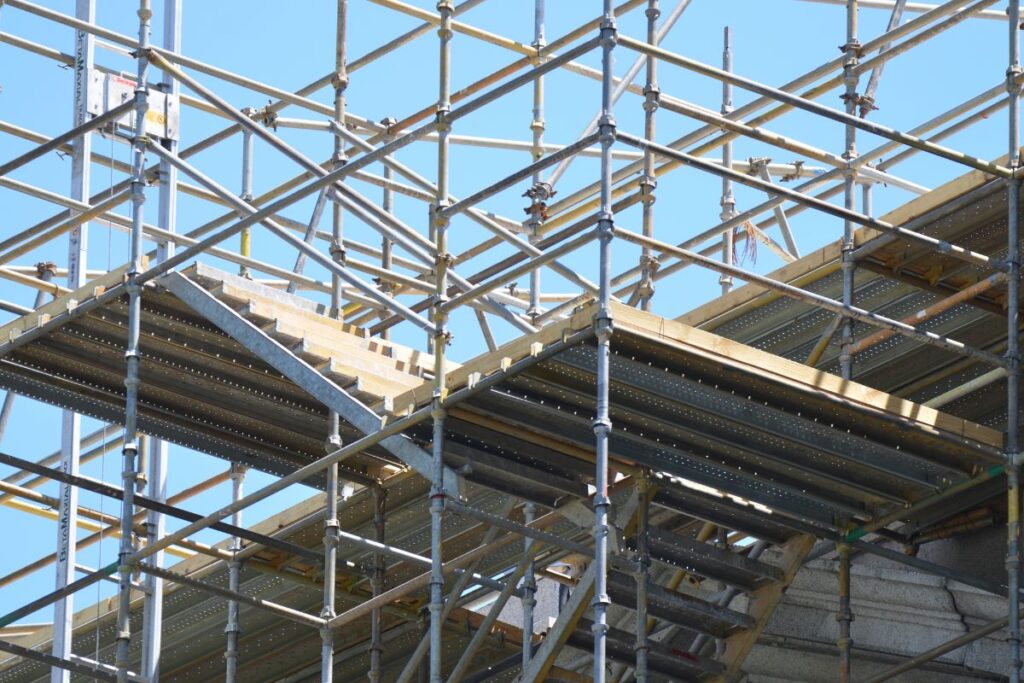
Once you know the cuplock scaffolding components, the system is easy to picture. Base jacks and sole boards spread the load into the ground. Vertical standards rise from them, carrying the welded bottom cups at each node. Ledgers drop their blade ends into those cups, and the top cup locks four of them in one action, forming the cuplock ledger and vertical frame. Bracing stiffens the whole structure, ties fix it to the building, and U-heads or walkway planks finish the top. Every part has one job, and the scaffold is safe only when all of them are present, sound and correctly locked. That is the point of learning the cuplock scaffolding parts before you build.
A Quick Cuplock Component Reference Guide
Use this quick reference as a fast site check. If any of these core cuplock scaffolding components is missing, damaged or wrongly fitted, stop and fix it before the crew loads the scaffold, every single time on site.
| Component | Function | Where it sits | Note |
|---|---|---|---|
| Vertical standard | Carries the load straight down | Upright at each node | Has the welded cups |
| Ledger | Ties the standards together | Horizontal into the cups | Locks in one action |
| Top and bottom cup | Locks the ledger joint | At every node | Never leave one open |
The note column is where most site mistakes quietly hide. None of these cuplock scaffolding parts is complicated, but a single open cup or one skipped ledger can undo the strength of every other component on the whole scaffold, without exception.
Where Components Commonly Go Wrong
Right way | Common mistake | |
|---|---|---|
Cups | Every cup fully engaged tight | Cups often left half open |
Ledgers | Full runs at every lift | Ledgers skipped to save time |
Half-locked cups and skipped ledgers are the two component faults that quietly weaken cuplock scaffolds on site. The scaffolding IS 2750 standard covers steel scaffolding requirements.
EXPERT INSIGHT
Bladez Electrotech, scaffolding manufacturer in Pune with 20 years in the trade, sees it every single week on site. Most cuplock failures trace back to one missing or half-locked component, not to the quality of the steel the contractor bought for site.
Learn the cuplock scaffolding components once and inspection becomes simple on any site. Check the standards, the ledgers, the top cup and bottom cup, the base, and the cuplock scaffolding accessories list before every single site load.
PUT THIS INTO PRACTICE
Know your cuplock scaffolding components, then source them from one manufacturer. Bladez Electrotech supplies verticals, ledgers, cups, jacks and the full accessories list, galvanised and delivered free across Pune and Mumbai, any quantity, straight to your busy site.
FREQUENTLY ASKED QUESTIONS
Everything Site Engineers Ask, About Cuplock Parts
Are all cuplock scaffolding components compatible between different manufacturers on a site?
Mostly, but not always. Cuplock is a common system, yet cup dimensions and ledger blades vary slightly between makers, so parts do not always lock cleanly. For a safe, tight fit, use cuplock components from one manufacturer, and Bladez Electrotech supplies fully matched verticals, ledgers, cups and accessories.
Can I buy cuplock parts separately today?
Yes. You can buy individual cuplock scaffolding parts to top up or replace worn stock, standards, ledgers, top cups, base jacks, U-heads, pins and bracing. Bladez Electrotech supplies both complete cuplock sets and separate components, so Pune and Mumbai contractors replace exactly what a job needs without over-ordering.
How do I inspect the cup lock on site?
Check that every top cup drops fully and locks with a quarter turn, that no cup is burred or cracked, and that each ledger blade seats cleanly in the bottom cup. A half-locked cup is the most common cuplock defect, so never load with open cups.
What base plate does each loaded cuplock standard need?
Every vertical standard needs a base plate, and on soft ground an adjustable base jack on a timber sole board. This spreads the load and stops the standard punching into the ground, which would let the whole scaffold settle and reduce the safe capacity of components above.
Do I need bracing on every bay?
Not every bay, but bracing is never optional. Diagonal bracing at regular bays stops the cuplock frame racking sideways, while ties fix it to the building. The pattern depends on scaffold height and load, so follow the design, and when unsure, add bracing rather than leave it out.
Where can I buy genuine cuplock accessories nearby?
Bladez Electrotech manufactures and supplies the full cuplock scaffolding accessories list, base plates, jacks, U-heads, bracing, pins, spigots, toe boards and planks, alongside the standards and ledgers. Pune and Mumbai contractors source every cuplock component from one manufacturer, galvanised, standard-compliant and delivered free to site, any quantity today.
Cuplock scaffolding components are simple once you learn them, the standard, the ledger, the top cup and bottom cup, the base and the accessories. Know each part, lock every cup, and inspect before loading. As a cuplock scaffolding manufacturer in Pune and Mumbai, Bladez Electrotech supplies every component, galvanised and delivered free of cost, any quantity, always.

Written by Dhananjay Kalekar
Dhananjay Kalekar is the Director of Bladez Electrotech, a scaffolding manufacturer in Pune with over 20 years of hands-on experience in cuplock, H-frame, props and formwork. He has supplied scaffolding to more than 2000 builders and contractors across Pune and Mumbai, and writes to help site engineers plan safe, correctly loaded scaffolds on every construction project across the region.
Disclaimer: This article is provided for general information only and is not a substitute for project-specific structural engineering advice. Cuplock scaffolding components must be selected, assembled and inspected to suit each site, its loads and its ground conditions. Always have a competent scaffold engineer design, inspect and sign off any loaded scaffold, and follow the manufacturer data and all applicable Indian safety standards before use on any construction site anywhere in India today.

Trusted scaffolding manufacturer in Pune and Mumbai. Free delivery, any quantity, 20+ years of experience.
Contact Info:
-
Address: 6, Shivdhruv Associates, Gut No. 96/2, Near Vighnaharta Services, Charholi Khurd bypass, RO Charholi Khurd, Tal. Khed, Dist. Pune - 412105
-
Email: sales@bladeze.com
-
Phone: +91 7030042278